
What are single unit dentures?
A single unit is a full denture for one jaw only: a full upper or a full lower on its own, with no partial involved.
You might have lost all your top teeth and kept your bottom ones, or the other way around. A single unit replaces the full arch you’ve lost, and bites against your natural teeth or an existing denture on the other side.
We take the records, design your denture in-house and make it. You choose your teeth from a wide range of shades so they suit the teeth in your other jaw.
What a single unit denture does for you
- Eating: can help restore your bite on the side you’ve lost.
- Facial support: helps fill out the lips and cheeks on that side of your mouth.
- Speech: makes sounds that rely on your teeth easier to say clearly.
- Appearance: fills out your smile, with teeth chosen to suit your other teeth.
- Confidence: can help you feel more at ease talking, laughing and eating in company.
Book a consultation
Call, text or send an enquiry. We get back to you within four business hours.
Who are single unit dentures good for?
A single unit suits you if one jaw has no teeth left and the other still has natural teeth or its own denture.
- You’ve lost one arch: all your upper or lower teeth are gone.
- You’re replacing an old denture: your full upper or full lower is loose, sore, broken or never felt right.
- Your teeth in one jaw need removing: an immediate denture can see you through healing first.
- You want something removable: you like being able to take your teeth out for cleaning and overnight.
When another option might suit you better
- Partial dentures: if you still have some teeth in that jaw, a partial fills the gaps around them.
- Full dentures: if you’ve lost the teeth in both jaws, you need a full upper and lower.
- Implant-retained dentures: if a single lower moves too much, implants can hold it in place.
What types of single unit dentures are available?
A single unit comes in the same three types as a full denture, made for your upper or your lower only.
We’ll explain the pros and cons of each at your consultation and recommend the one that suits you.
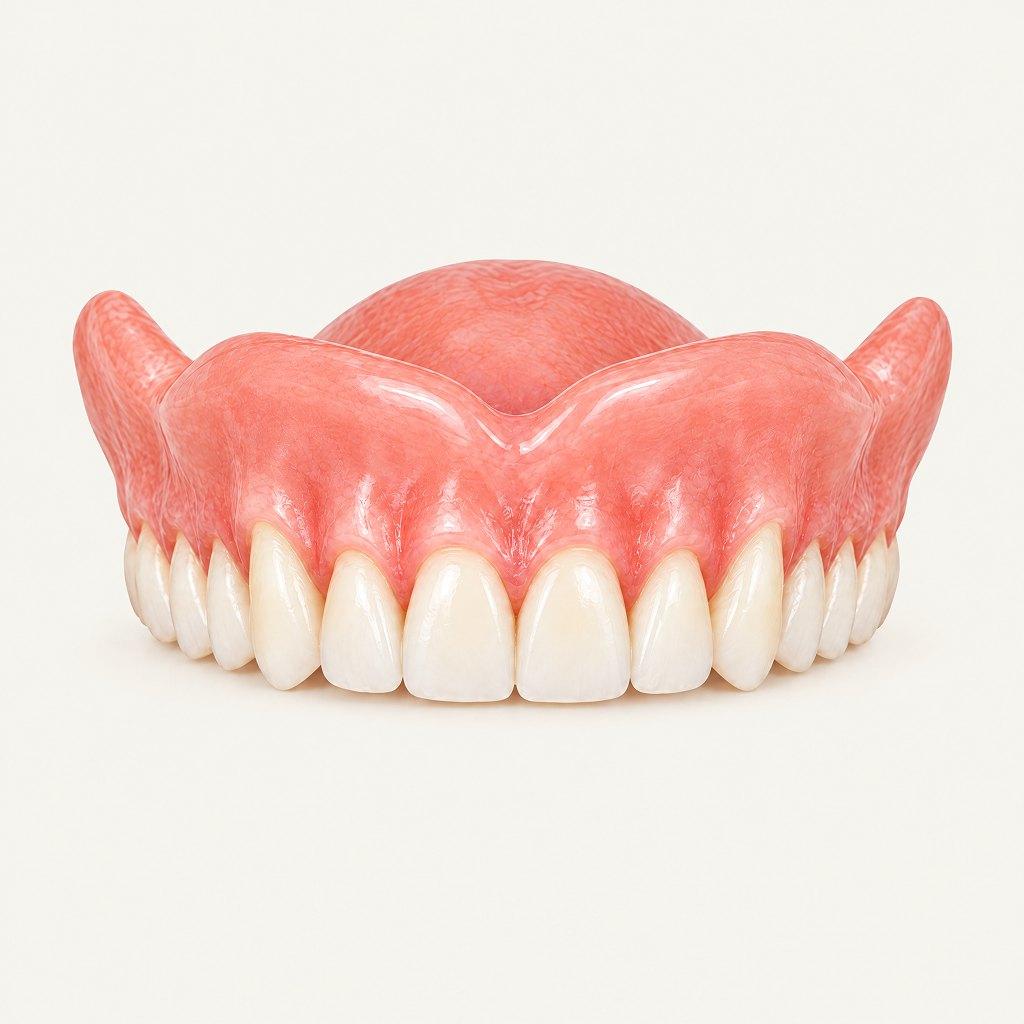
Conventional premium dentures
Our main final denture, made once any remaining teeth in that jaw have been removed and your gums have healed. Because your gums have settled into their final shape, we can build the denture for an accurate, long-term fit.
- Fit: built on healed gums, with your bite recorded against your other teeth in your natural jaw position.
- Best for: people who have already lost all the teeth in their upper or lower jaw.
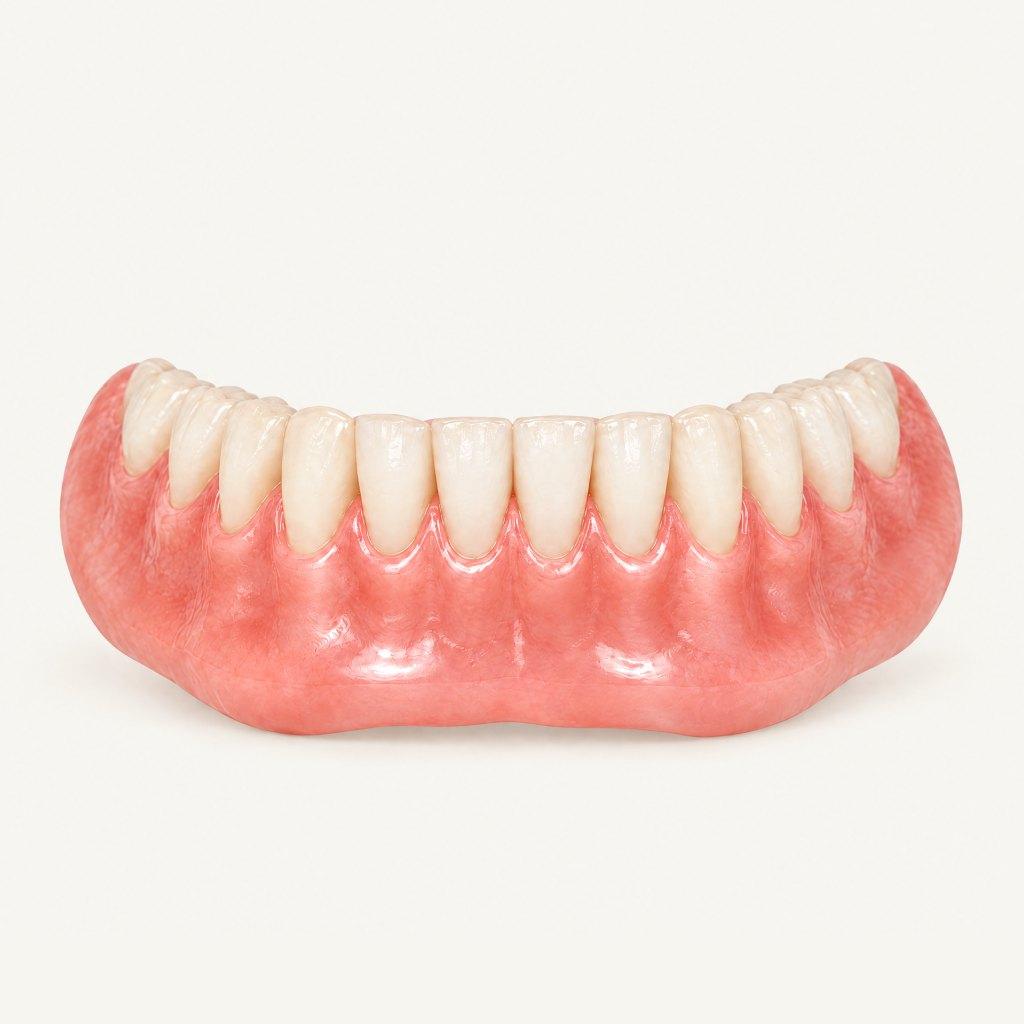
Immediate dentures
A temporary upper or lower made in advance that can be fitted on the day your dentist removes your teeth, so you aren’t left without teeth. You wear it for 12 to 16 weeks while your gums heal, with refits and adjustments along the way, then we make your final denture.
- Fit: fitted on the day, then refitted and adjusted as your gums change.
- Best for: people who still have teeth to remove in one jaw and don’t want to go without in the meantime.
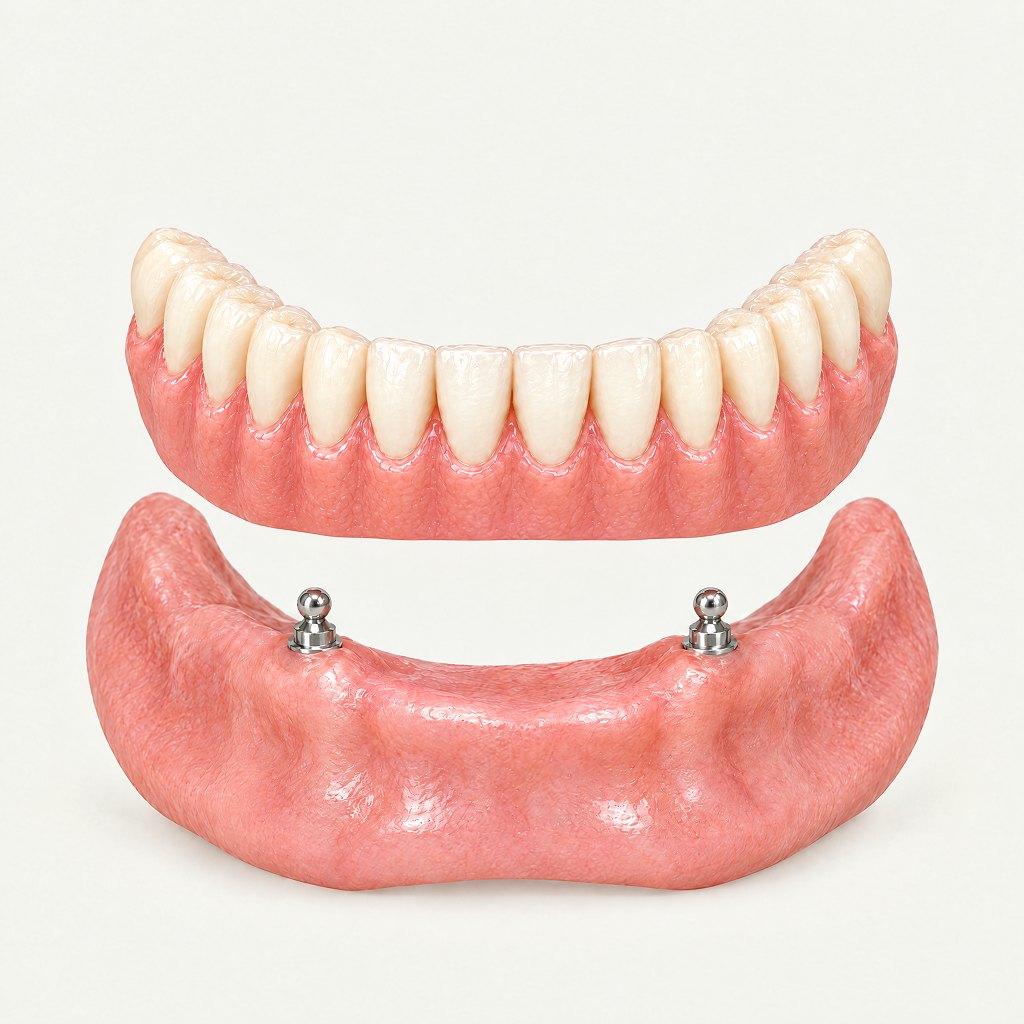
Implant-retained dentures
An upper or lower that clips onto implants your dentist places in your jaw. The implants anchor the denture so it moves less when you eat and speak, while you can still remove it for cleaning.
- Fit: held in place by implants for extra stability.
- Best for: people who want a secure lower in particular, since a lower can’t form suction the way an upper does.
The single unit denture process
A single unit follows the same process as a full denture, over about four appointments.
- What brought you in: We ask what made you look into a denture now.
- Oral examination: we check the jaw you’re replacing and the teeth it will bite against.
- A clear recommendation: the denture we think suits you, with our reasons.
- Impressions: Accurate impressions of the jaw you’re replacing give an upper its suction and a lower a steady footing.
- Bite: how your new denture meets your other teeth, recorded in your natural jaw position.
- Tooth shade: we match the shade and shape to suit your other teeth.
- Fit and bite: We check the denture sits well and meets your other teeth evenly.
- Appearance: you check the look and ask for changes before it’s finished.
- Final fit: We fit your denture and make any small adjustments.
- Care instructions: you’ll learn how to put it in, take it out, clean it and store it.
- Adjustments: We see you for adjustments as needed while you settle in.
- Clean and polish: every six months is good practice.
- Fit check: come back at least every two years.
How much does a single unit denture cost?
The cost depends on the type of denture and any extras.
Every case is different, so we discuss cost after you’ve booked and we’ve seen what your treatment involves.
What affects the cost
- Denture type: conventional premium, immediate or implant-retained.
- Upper or lower: which jaw you’re replacing.
- Extras: such as a soft liner.
Ways to pay
We’re upfront about cost once we’ve seen you, and there are a few ways to manage it:
- Health funds: we accept all major health funds and claim on the spot with HICAPS, so you only pay the gap.
- MediPay payment plans: spread the cost over instalments, so you can go ahead with the right treatment rather than a compromise.
We accept all health funds
We work with all major health insurance providers, so you can claim toward your treatment on the spot with HICAPS.


