
What are partial dentures?
A partial denture is a custom-made, removable set of replacement teeth for when you’re missing anywhere from one tooth to most of your teeth, but still have some natural teeth.
It fills the gaps in your smile while working alongside the teeth you still have. The replacement teeth sit on a gum-coloured base or a thin frame, and clasps hold the denture in place against your natural teeth.
Because it’s designed around your own teeth, no two partials are the same. We take the records and design yours in-house, and you choose from a wide range of tooth shades to suit the natural teeth beside them. If you’ve lost every tooth in one jaw, you need a single unit denture instead.
What a partial denture does for you
Gaps left by missing teeth affect more than the way your smile looks. A well-made partial helps with the everyday things tooth loss makes harder:
- Eating: fills the gaps so you can chew more evenly.
- Keeping teeth in place: helps stop your remaining teeth drifting or tilting into the spaces left behind.
- Speech: makes sounds that rely on your teeth easier to say clearly.
- Appearance: fills out your smile, with tooth shades chosen to suit your own teeth.
- Confidence: can help you feel more at ease talking, laughing and eating in company.
Book a consultation
Call, text or send an enquiry. We get back to you within four business hours.
Who are partial dentures good for?
Partial dentures suit people who are missing one or more teeth but still have natural teeth in the same jaw.
Teeth are lost for many reasons, including decay, gum disease or injury. A partial is one of the most common ways to fill those gaps without replacing the teeth you still have. It may be a good fit for you if:
- You’re missing teeth: anywhere from one tooth to most of your teeth in your upper or lower jaw.
- Your remaining teeth are sound: the teeth you have left are strong enough to support the denture.
- Your current partial isn’t right: an older partial has become loose, broken or uncomfortable.
- You prefer a non-surgical option: you’d like replacement teeth that don’t need surgery.
- You want something removable: you like being able to take your teeth out for cleaning and overnight.
When another option might suit you better
A partial isn’t the right answer for every mouth. Depending on your situation, one of these may be a better fit:
- No room for a denture: if your bottom teeth touch the gum when you close, an implant and crown from your dentist may suit that gap better.
- Full or single unit dentures: if your remaining teeth in a jaw need to come out, a full denture for that jaw may be the better long-term option.
- Immediate dentures: if teeth are being removed, an immediate denture sees you through healing.
If you’re not sure which option is right for you, we’ll examine your mouth and give you a clear recommendation. The decision is yours.
What types of partial dentures are available?
We make four types of partial denture. Acrylic is where many people start, and chrome or flexible give you more.
We’ll explain the pros and cons of each at your consultation and recommend the one that suits your mouth.
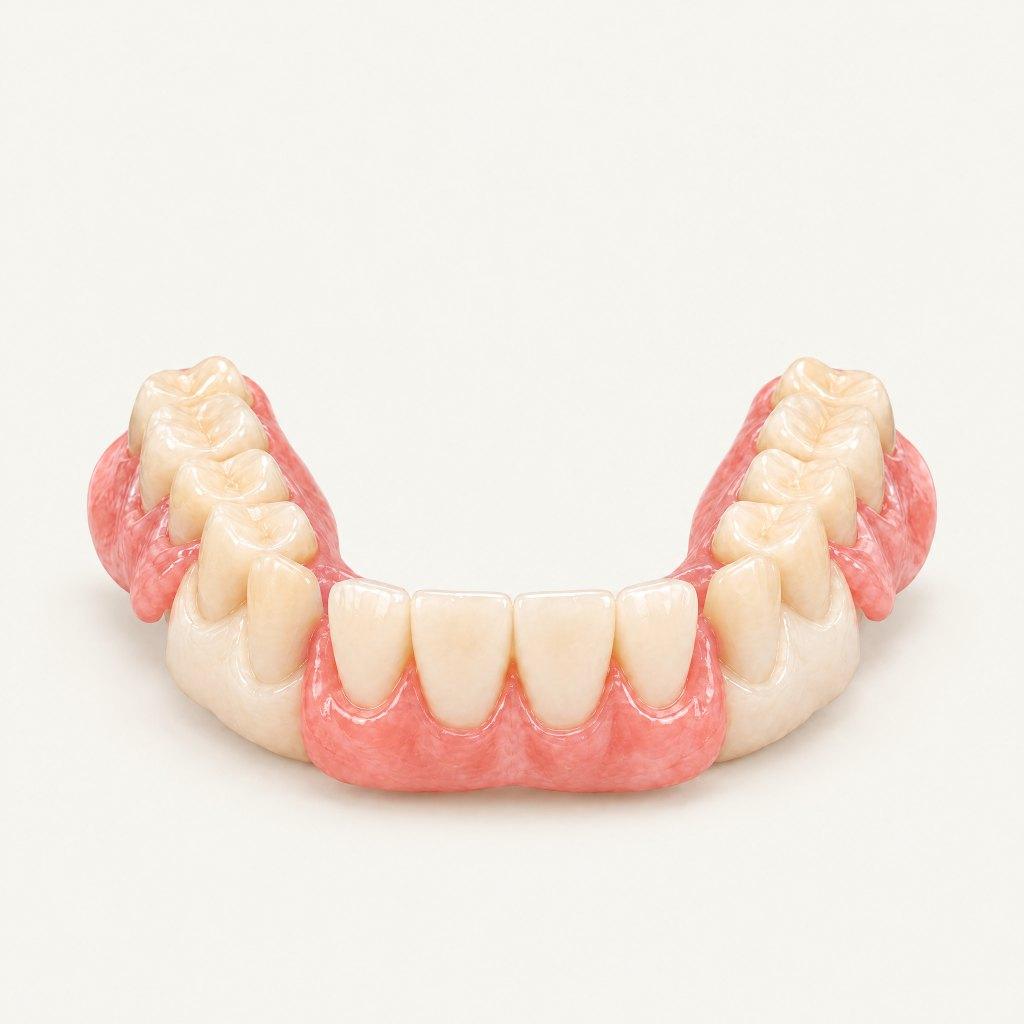
Standard acrylic partial dentures
A gum-coloured base that holds the replacement teeth, with clasps against your remaining natural teeth. It’s the entry option, and teeth can usually be added later if needed.
- Feel: a thicker base, which some people notice when they talk.
- Best for: a practical way to fill gaps, or as a first partial.
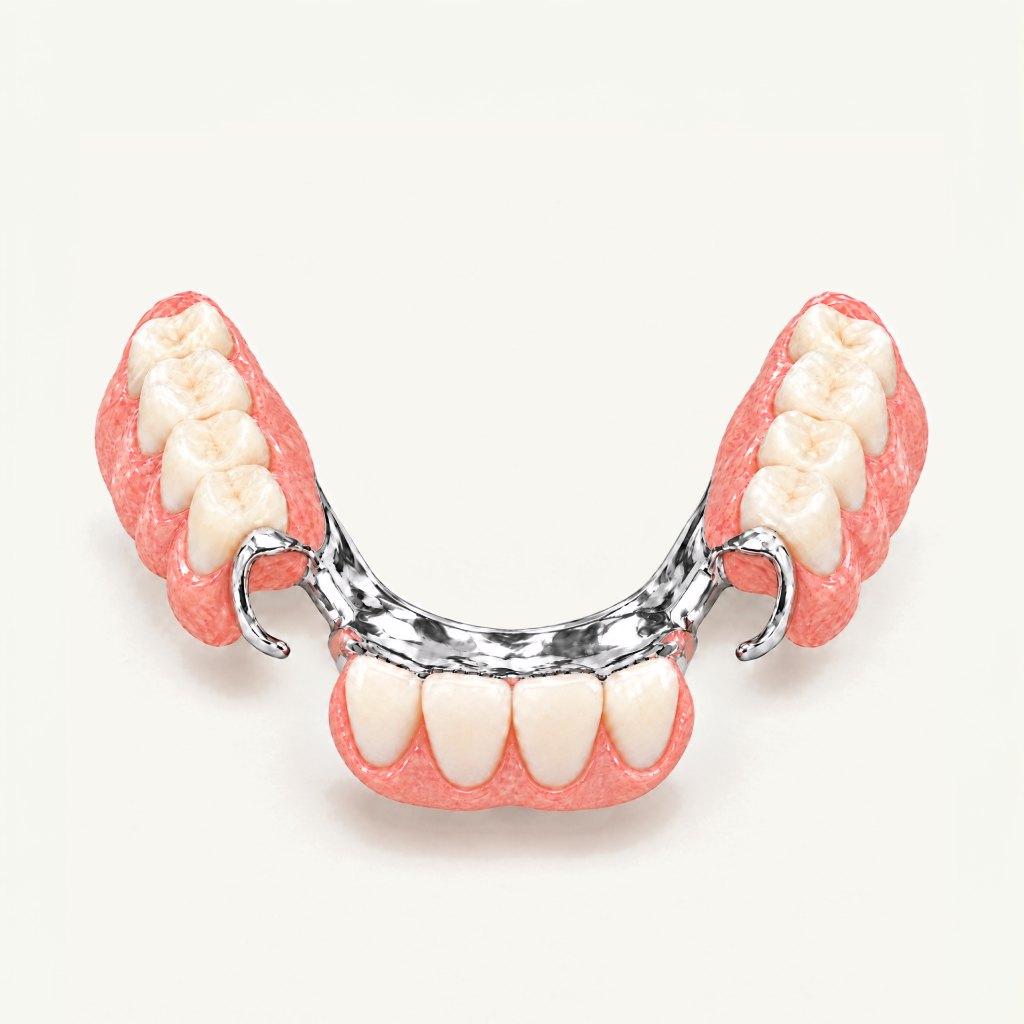
Chrome partial dentures
A partial built on a thin, strong metal frame. Because the frame is strong, it can be made slimmer. We hide the frame where we can, though sometimes it shows.
- Feel: thin and strong, with less bulk in your mouth.
- Best for: people whose speech is affected by the thickness of an acrylic partial.
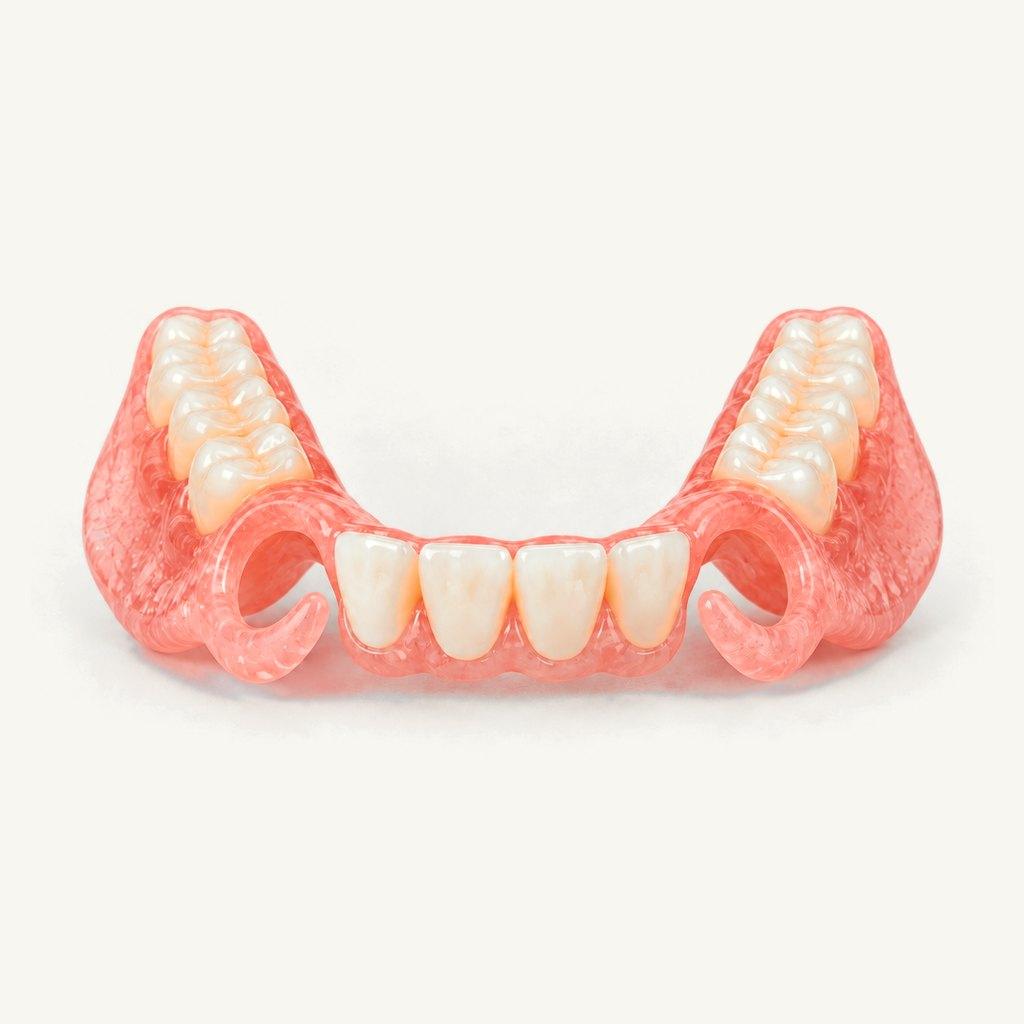
Flexible partial dentures
A partial with no visible metal clasps, so it looks natural. Flexible partials are durable, but they can’t be modified or added to later.
- Appearance: no metal clasps on show.
- Best for: people with stable teeth and no expected tooth loss.
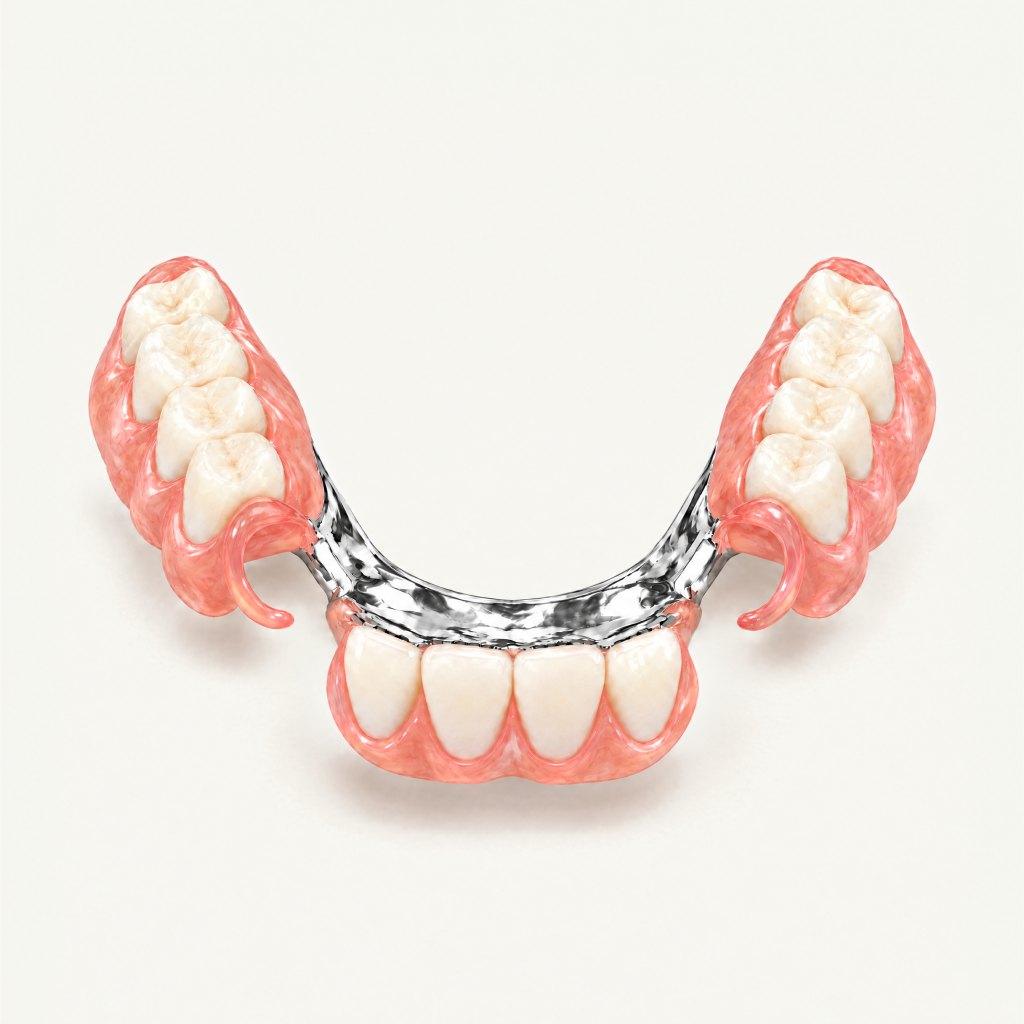
Chrome-flexi partial dentures
A chrome base with flexible clasps. It combines a thin, strong base with no metal on show when you smile.
- Feel: the thin, strong base of chrome.
- Best for: people who want strength and no visible clasps in one denture.
The partial denture process
Getting a partial denture takes two to four visits, with each stage building on the last so your finished partial fits alongside your natural teeth.
The exact number depends on your case and the type of partial. We talk you through each step as it happens.
Your first visit is about understanding your mouth and what you want from your new teeth. There’s no pressure to commit on the day.
- What brought you in: We ask what made you look into a partial now.
- Oral examination: we check your gums, the gaps to be filled and your remaining teeth.
- A clear recommendation: the partial we think suits you, with our reasons, and an outline of the visits involved.
In one appointment, we take impressions, record your bite and match your tooth shade. A partial has to fit around your natural teeth as well as your gums, so accurate records are one of the most important parts of the process.
- Impressions: we record your gums and the teeth the clasps will sit against, so your partial sits securely.
- Bite: we record how your teeth meet so your partial works evenly with your natural bite.
- Tooth shade: we match the shade and shape to suit your natural teeth.
We then design your partial in-house, planning where the clasps sit so it’s secure and as discreet as possible.
For a chrome partial, a dedicated chrome lab makes the frame from our design. We then test-fit the frame in your mouth before any teeth go on. It adds a visit, and it means the frame fits before the rest of the denture is built on it.
You try your partial with the teeth set in place, then we finish and fit it.
- Fit: We check how the partial sits around your teeth and against your gums.
- Bite and look: we check your teeth meet evenly, and you check the look in the mirror.
- Care instructions: you’ll learn how to put your partial in, take it out and clean it.
Most people need a short adjustment period with a new partial. We see you for adjustments as needed while you settle in.
- Adjustments: come back if anything rubs or presses, and we’ll ease it.
- Changes over time: if you lose more teeth later, acrylic and chrome partials can often be added to.
- Fit check: come back at least every two years so we can check the fit.
How much do partial dentures cost?
The cost of a partial denture depends on the type of partial you choose and whether you need one arch or two.
Every case is different, so we discuss cost after you’ve booked and we’ve seen what your treatment involves.
What affects the cost
- Partial type: acrylic, chrome, flexible and chrome-flexi partials each involve different work.
- Number of arches: an upper partial, a lower partial, or both.
- Extras: such as a soft liner.
Ways to pay
We’re upfront about cost once we’ve seen you, and there are a few ways to manage it:
- Health funds: we accept all major health funds and claim on the spot with HICAPS, so you only pay the gap.
- MediPay payment plans: spread the cost over instalments, so you can go ahead with the right treatment rather than a compromise.
We accept all health funds
We work with all major health insurance providers, so you can claim toward your treatment on the spot with HICAPS.


